Showing posts with label shibuya. Show all posts

Monday, December 25, 2006

Christmas Illumination in Shibuya


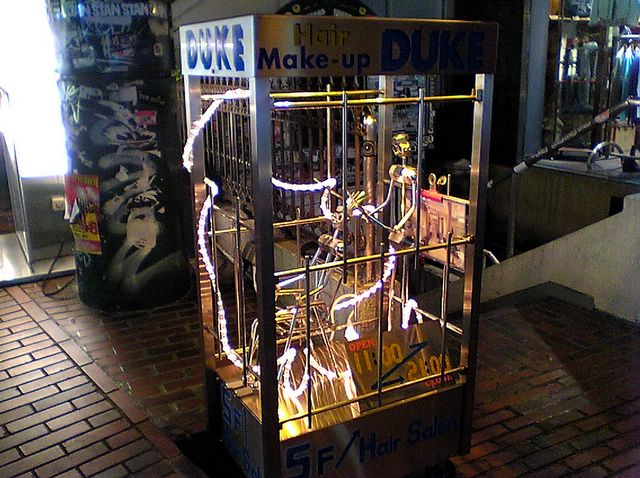
Christmas illumination in Shibuya. Now you can understand why all the cities look dark, compared to Tokyo.


Detail of a Christmas decoration. Romantic, isn't it?


Same Christmas decoration as before... just a little bit less romantic ^_^
But this is Japan.

Sunday, December 21, 2003

Shibuya (渋谷区; -ku)

Shibuya (渋谷区; -ku) is a special ward located in Tokyo, Japan.


The ward was founded on March 15, 1947. As of 2003, the ward has an estimated population of 201,524 and a density of 13,337.13 persons per km?. The total area is 15.11 km2.

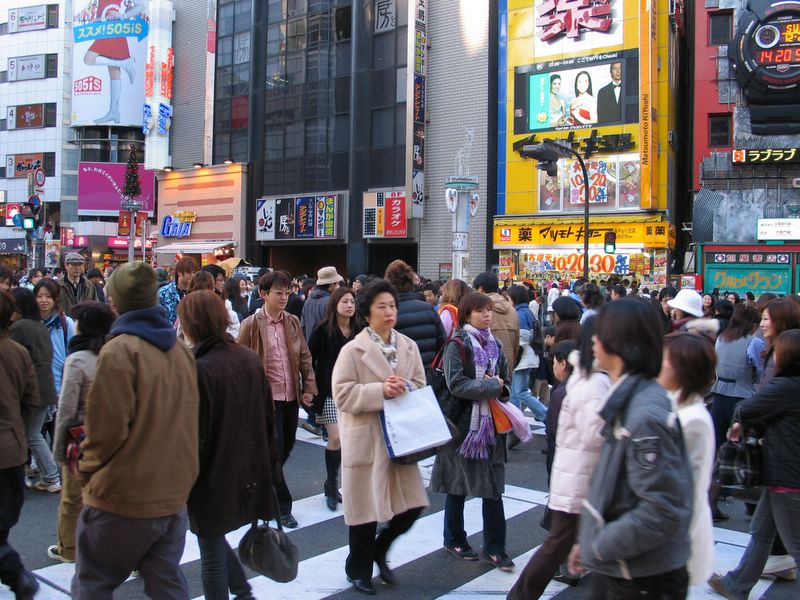
Largely a commercial and entertainment district, Shibuya has achieved great popularity among young people in the last 30 years. There are several famous fashion department stores in Shibuya, but the most famous one is called "Shibuya 109" (ichimarukyu).
This department store is very popular among young people, especially teens, and it is famous as the origin of the kogal subculture. The fashion scene extends northwards to Harajuku, and Shibuya is increasingly becoming a fashion trendsetter for all Asia.


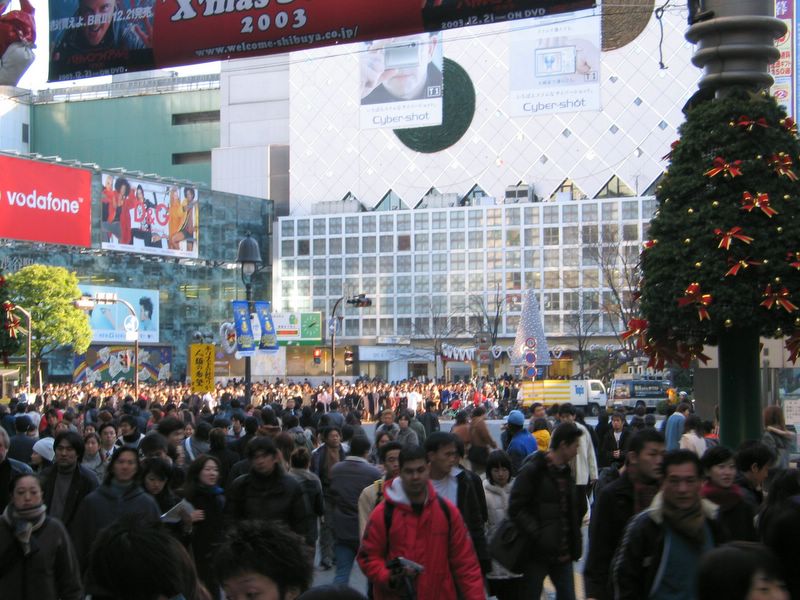
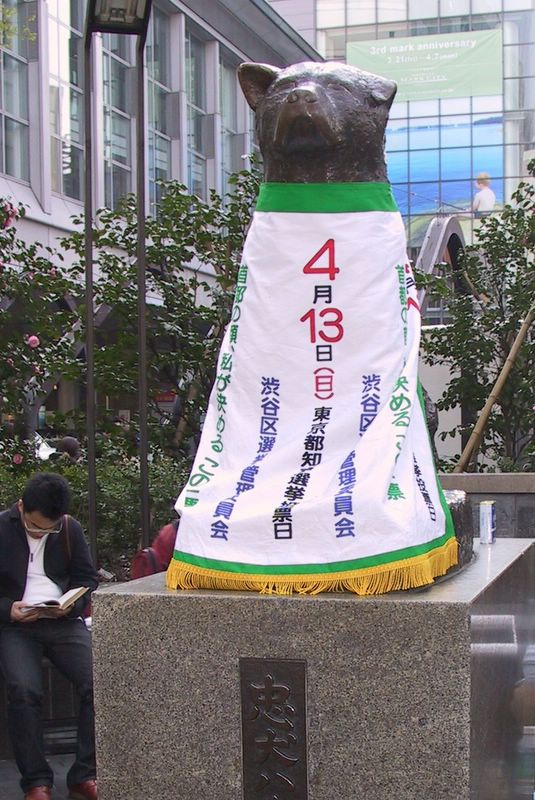
Shibuya is also famous for its intersection crossing, reportedly the world's busiest, which is located in front of Shibuya Station and uses a four-way stop to allow pedestrians to inundate the entire intersection (this is called a "pedestrian scramble", スクランブル交差点 sukuranburu kousaten, or the Barnes Dance after traffic engineer Henry Barnes). Furthermore, the crossing is famous for three large TV screens, which are on the buildings facing the crossing. The 2003 movie Lost in Translation featured a scene at the crossing. The plaza in front of the station is known as Hachiko (ハチ公) Square, after a loyal dog who waited here for its master for years on end and is now commemorated with a diminutive statue.


To the north of Shibuya station is Dogenzaka (道玄坂), offering entertainment for a more mature audience with many nightclubs and love hotels.


Sunday, March 30, 2003

Hachiko - ハチ公

The year was 1925. Every morning, Professor Ueno Eizaburo walked to Shibuya station accompanied by his loyal dog, Hachi, nicknamed Hachiko. Hachiko didn't accompany his master to his teaching job at the Imperial University (now known as Tokyo University), but when Professor Ueno returned every day at 3pm, the dog was always at the station waiting for him. However, on May 21 of that year, Ueno died of a stroke while at the university. Hachiko went to Shibuya as always to meet his master, but 3 o'clock came and went, and the professor didn't arrive. So Hachiko waited. And waited.

The Akita must have known something was wrong, but nonetheless he returned to the station every day at 3 o'clock to meet the train. Soon people began to notice the loyal dog's trips made in vain to meet his master. Ueno's former gardener, the Shibuya stationmaster, and others began feeding Hachiko and giving him shelter. Word of his unaltered routine spread across the nation, and he was held up as a shining example of loyalty. People travelled to Shibuya simply to see Hachiko, feed him, and gently touch his head for luck.

The months turned to years, and still Hachiko returned to Shibuya station daily at 3pm, even as arthritis and aging took their toll. Finally, on March 7, 1934 - nearly ten years after last seeing Professor Ueno - the 12-year-old Akita was found dead on the same spot outside the station where he had spent so many hours waiting for his master.

Hachiko's death made the front pages of major Japanese newspapers. A day of mourning was declared. Contributions poured in from all over the country to memorialize the dog that had won the hearts of the nation. Sculptor Ando Teru was hired, with the money that had been contributed, to create a bronze statue of Hachiko. In April 1934 it was placed on the exact spot where Hachiko had waited for so long.

Within a few years, however, Japan was at war, and any available metal was melted down to make weapons. Not even Hachiko's statue was spared. After the war, in 1948, Ando's son Takeshi sculpted a new Hachiko - the statue that stands outside Shibuya station to this day.

This is not the only monument to chuken ("loyal dog") Hachiko to be found in Tokyo, however. Aoyama Cemetery contains a memorial to Hachiko on the site of Professor Ueno's grave. Some of Hachiko's bones are reportedly buried there, but in fact, Hachiko can still be seen, stuffed, in the National Science Museum northwest of Ueno station.

Back in Shibuya, Hachiko's statue sits in a noble pose, forever waiting for his master. His statue, appropriately, is the best-known landmark and meeting place in Shibuya, where hundreds of people every day sit and wait for their friends.