Tanabata is the special night when "
Orihime" (織女)and "
Hikoboshi" (牽牛) date on the Milky Way once a year (Vega and Altair). Orihime, a daughter of the Lord, was a weaver. The Lord was worrying about his daughter who had devoted herself to weaving threads into cloths all day long. One day, he met a young diligent cowboy whose name was Hikoboshi. Since he was very impressed with Hikoboshi, he introduced Hikoboshi to Orihime as a fiance.

Hikoboshi and Orihime fell in love each other at a glance and from that day, both of them date every day leaving their job alone. That behavior made the Lord angry and he pull them apart on the each side of the Milky Way. Since then, Orihime had been crying for Hikoboshi every day. The Lord felt sorry for crushed daughter with grief, finally he allowed them to cross the Milky Way to meet each other only once a year on the seventh of July. When it rained, magpies kindly helped them to cross the flooded river.

They say that the origin of Tanabata legend is China and present story had been formed in 6th Century. Then the story had been transferred to Japan Heian era (794-1185), with the customs and spread over common people via aristocrats. After that, Chinese customs had been mixed with Japanese faith and local event and formed present style. Therefore, festival style varies from area to area. For example, some districts do the events in August based on the lunar calendar.
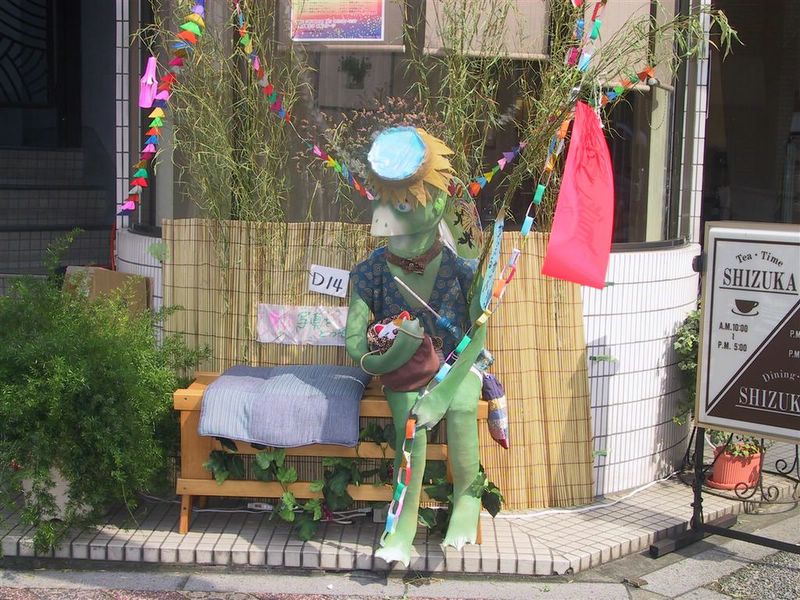
On that night, in general, each house places the bamboo grass under the eaves and decorates it with paper dolls etc. Then each family member writes his/her own wish on a strip of paper in his/her own way.

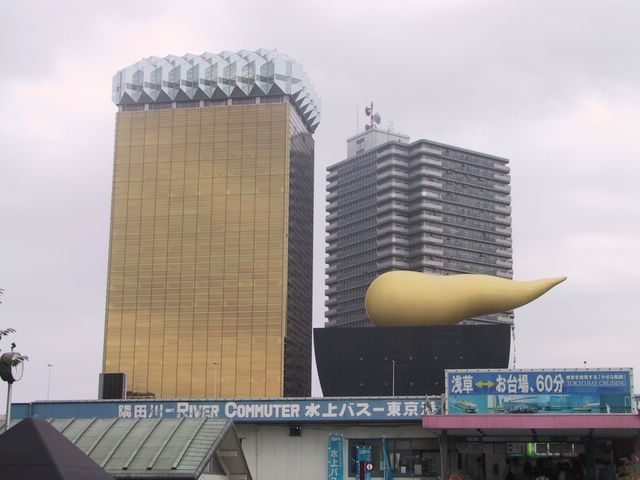
The pictures above have been taken near Ueno, on the way to Asakusa.



 They say that the origin of Tanabata legend is China and present story had been formed in 6th Century. Then the story had been transferred to Japan Heian era (794-1185), with the customs and spread over common people via aristocrats. After that, Chinese customs had been mixed with Japanese faith and local event and formed present style. Therefore, festival style varies from area to area. For example, some districts do the events in August based on the lunar calendar.


![[ext]](https://lh3.googleusercontent.com/blogger_img_proxy/AEn0k_viuxd1pCVkbNUo9YU0QMI-GOxBFnjH_p5CimlYNocQfVNXBlBuvR7GaA1YHfOjD5v3kCK9b9TWQvqjnHuD4mPYRirrrUPGKa_2XI-K=s0-d) here.
here.